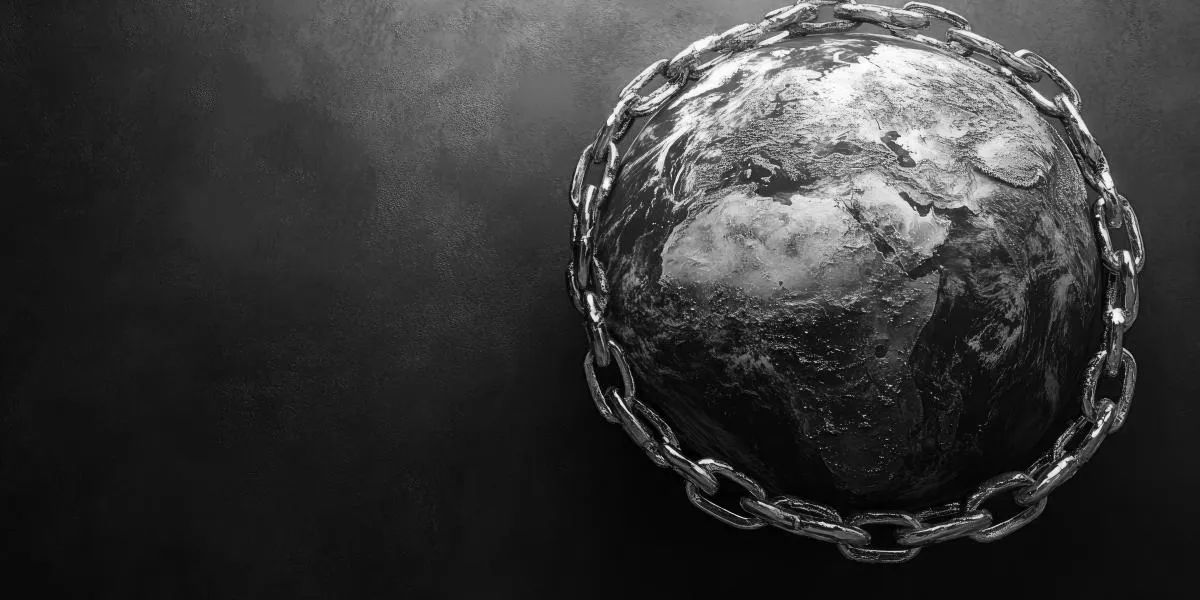

The contemporary world operates according to a fundamental paradox: it is multipolar in discourse, but multivectoral in practice. As long as Western policymakers and analysts refuse to acknowledge this gap, their international policy will continue to chase reality—not because of a lack of power, but because they are trying to govern a world that no longer exists. Donald Trump has understood this new configuration. Europe, for its part, continues to lecture others.
For several years, Western public opinion has been told that the world has entered a “multipolar era.” The term appears repeatedly in political speeches, strategic documents, and academic analyses, as if it accurately described international reality—as if we were truly moving toward a new stable equilibrium based on a few major powers, clearly defined blocs, and predictable relations.
The reality is quite different: more disorderly, more fluid. It is precisely this gap that helps explain the paralysis in which Western theory and practice of international relations seem trapped. At the level of discourse, the world is still described as multipolar. At the level of practice, it has already entered a fundamentally multivectoral era.
Russia at the Origin of the Concept
It should be recalled here that multivectorality is not a spontaneous product of the chaos of globalization. It is a strategically elaborated concept. First emerging empirically in Russian strategic thinking after the end of the Cold War, it was later theorized in the literature on Russian foreign policy and the post-Soviet space.
This approach aims to preserve a state’s strategic autonomy through parallel and non-exclusive relations with multiple centres of power, rather than through long-term alignment with a single bloc.
This logic has been analysed by several Russian and Western authors. Thus, Andrei P. Tsygankov describes Russian foreign policy as a form of strategic pluralism and multi-vector balancing in a context of post–Cold War uncertainty (Russia’s Foreign Policy: Change and Continuity in National Identity). Similarly, Bobo Lo defines Russian strategy as essentially network-based and adaptive, relying more on fluid connections than on antagonistic bloc logic (Russia and the New World Disorder).
In its public discourse, Moscow sometimes uses the notion of a “multipolar world,” but more as an instrument of strategic communication than as a true analytical framework for its actions. For several decades, its foreign policy has followed a different logic: flexible, networked, and non-aligned. It develops forms of cooperation—both peaceful and conflictual, but always forms of cooperation—simultaneously with a wide range of international actors, allies and adversaries alike, without ever seeking durable attachment to a single centre of power.
This is what multivectorality looks like in practice.
Western Misunderstanding
The problem arises when Western decision-makers translate this logic into their own conceptual framework and view Russia as a classical multipolar rival seeking to build its own bloc.
Yet the BRICS (Brazil, Russia, India, China, and South Africa) do not constitute a traditional economic bloc in the conventional sense; they operate more as a network. Likewise, Russia does not seek to build a military alliance comparable to Western structures, but instead favors forms of multivectoral military cooperation, varying according to circumstances.
When Western policymakers and analysts interpret Russia exclusively through the prism of multipolarity, they in fact reveal their misunderstanding of Russian strategy. It then appears to them as unpredictable, contradictory, and difficult to grasp.
This misunderstanding also deprives Western public opinion of a broader reading of the contemporary world. Like part of their intellectual and political elites, they remain, in a sense, frozen in space and time. They experience a growing sense of dislocation and paralysis, caught between a past structured by blocs and a future governed by far more fluid logics.
They thus remain suspended between two eras: that of old bipolar or multipolar rivalries, and that of a new global dynamic based on flexible alignments, multiple partnerships, and the simultaneous coexistence of cooperation and competition.
From Sanctions to Reversed Effects
The example of sanctions imposed on Russia perfectly illustrates this evolution. Designed according to the logic of a multipolar world, they aimed to isolate a “pole” of power, exert economic and political pressure on it, and ultimately alter its behaviour.
In a multivectoral reality, however, their effects are different. When one Western vector closes to Russia, others remain open. Instead of isolation, what occurs is reorientation. Instead of the expected collapse, adaptation takes place. Sanctions do not interrupt flows; they merely redirect them.
This logic extends far beyond the Russian case. In an international system characterized by the multiplication of partnerships and networks, the coercive instruments inherited from the Western order increasingly fail to deliver the expected results. They remain costly, but become less decisive.
NATO in a World Without Fixed Lines
A similar dynamic can be observed within NATO. The Alliance remains an essential framework of Western collective defence, but it is increasingly struggling to function as the political matrix of the global order.
Not only are its costs steadily rising and its capacity for adaptation limited, but it is also marked by growing divergences in the perception of threats. What appears as a strategic priority for some allies is seen by others as secondary, or even counterproductive.
In this context, many states outside the Alliance carefully avoid any exclusive alignment. They do not reject cooperation with the West; they simply refuse to give up their other options. They seek to preserve freedom of manoeuvre rather than to commit permanently to a single camp.
The contemporary world thus operates according to a fundamental paradox: it remains multipolar in discourse, but has become multivectoral in practice.
As long as Western policymakers and analysts refuse to acknowledge this reality, their international action will continue to lag behind events. Not because the West lacks power, but because it is still trying to govern a world that no longer exists.
Donald Trump, in his own way, appears to have understood this transformation. Europe, by contrast, often continues to lecture the world using the conceptual categories of the previous century.
The Geopolitical Impasse
While the European Union continues to think in terms of blocs, procedures, and moral declarations, the world has already changed dimension. It has become fast-moving, networked, and multivectoral. It is within this gap that the current geopolitical impasse has emerged: the West retains its power, but it is losing the pace.
Politically and mentally trapped in the categories of the last century, the European Union remains attached to a vision of American omnipotence and NATO inherited from the post–Cold War era. While international relations are fragmenting, overlapping, and constantly reconfiguring, Brussels remains faithful to a classical, slow diplomacy based on the permanent search for consensus—tools that today produce increasingly little real influence.
Moreover, Europe often mocks the “ignorance” and lack of refinement of Donald Trump’s entourage. The American president is not only seen as a political problem; he is treated as a form of heresy. He embodies the one who breaks the image of the West that Europe is still trying to preserve.
Yet Trump’s “private diplomacy”—direct deals, personal channels, reliance on capital rather than institutions—is not an anomaly. It appears, rather, as an attempt to break out of the Western paralysis described above.
The European critique of Trump often takes the form of moralism that overlooks a difficult-to-deny fact: like the former European powers before them, the United States has never ceased, since the Second World War, to wage wars, intervene, and expand its influence. The Trump presidency therefore does not alter the predatory nature of Western power; it mainly changes its modes of expression.
The Pentagon has recently confirmed that Trump’s America continues, while reinterpreting it, the logic of the “Grand Chessboard” formulated by Zbigniew Brzezinski. In this vision, Eurasia remains the decisive strategic space for global power, which requires the United States to prevent the emergence of any power capable of dominating the entire continent.
The difference is that Trump applies this logic in a far more transactional, personalized, and short-term manner. Where Brzezinski conceived the chessboard in systemic and geopolitical terms, Trump treats it more as a set of instruments for directly asserting power and extracting immediate benefit, without excessive regard for allied sensitivities or international rules.
Trump does not hide what was previously wrapped in the refined language of diplomacy. Faced with his adversaries, he uses his own version of their methods. He accelerates an already existing predatory process.
Why? Because in a fluid world, stopping means losing.
It is precisely for this reason that Donald Trump appears to have assumed the role of Attila, the “Scourge of God.” Intuitively, he has accepted the paradoxical nature of the contemporary world and seeks to exploit it to his advantage: a world that is multipolar in discourse, but profoundly multivectoral in its actual functioning.
Europe’s Strategic Errors
European political leaders and analysts devote considerable energy to psychological, and even psychiatric, analyses of Vladimir Putin and Donald Trump. In Western Europe as well as in Croatia, Slovenia, Poland, and Ukraine, these interpretations often take the form of nicknames intended to summarize their political judgment.
The Russian president is frequently referred to by the derogatory nickname “Pootler” (a blend of Putin and Hitler), a pejorative neologism that directly equates his policies with the Nazi model. This verbal attack also functions as a defensive mechanism: it allows one to bypass a more uncomfortable reality—namely, that the rehabilitation of certain collaborators of fascist regimes did not take place in Russia, but in several Eastern European countries, under the banner of anti-communism and geopolitical necessity, with the implicit tolerance of Brussels and the support of Washington.
Antifascism is thus relativized and adapted to current political circumstances, rather than remaining a foundational value of European consciousness.
The same mechanism appears in the criticism directed at Donald Trump. In Serbia, as in Croatia or Slovenia, his opponents frequently refer to him as the “orange clown,” an allusion to his distinctive complexion but also to a style perceived as erratic, unpredictable, and shaped by the world of entertainment.
Yet this caricature obscures a difficult-to-ignore fact: the first “orange clown,” without any added exaggeration, may in fact be Volodymyr Zelensky himself, a political heir of the Orange Revolution and a former comedian turned head of state. Before his presidency, he was known primarily for his career in entertainment and satire.
Meanwhile, according to the adage that while dogs bark, the caravan moves on, Europe stubbornly refuses to confront its own strategic mistakes.
It persists in a bloc-based logic that has progressively excluded it from many parallel channels of influence. It remains trapped in slow decision-making procedures and institutional rigidity directly inherited from this worldview. Sanctions are adopted without a genuine exit strategy. The Global South is often neglected. And pragmatism is frequently perceived as moral compromise rather than as a tool of political action.
But the most serious error may lie elsewhere.
Europe appears to have lost its strategic intuition.
Yet intuition is often the source of what is, in practice, called political intelligence: the ability to perceive transformation before it becomes obvious, to react before old models are exhausted, and to act in real time rather than on the basis of outdated world maps.
It is precisely this faculty that is today lacking in a large part of Europe’s elites.
The American Fear of Kafka’s Metamorphosis
Competent in procedural terms but slow in geopolitical terms, Europe is today present within institutions yet absent in practice. Americans, by contrast, seem to have rediscovered a sense of pragmatism under the influence of a very specific fear: that of ending up like Gregor Samsa in Kafka’s Metamorphosis.
Carrying ever more demanding allies on their shoulders, whose loyalty is at times self-interested, they have come to fear waking up one morning transformed into an insect: useless, rejected, and disposable.
They have therefore democratically chosen no longer to be the traveling salesman of the West. No longer to finance alone a “Western family” that might, like Samsa’s, eventually come to see them as a burden. They feared the loss of their dignity, their power, and the central role to which they had grown accustomed. They feared becoming victims of the very system they had helped build, embodying Kafkaesque absurdity in a world no longer capable of gratitude—a world that no longer dreams the American dream.
It is in this context that the “Scourge of God” and its promise of a “credit-based peace” have emerged. It is also within this logic that Donald Trump’s “New Year firework display” aimed at his adversaries at the beginning of 2026 should be interpreted.
The events of this early year can thus be read through the prism of the multivector dynamics that now characterize international relations.
The “Fireworks Over Valdai”
On 30 December 2025, extending into 1 January 2026, events were dominated by what some media outlets called the “Valdai fireworks”: a reported drone attack targeting Vladimir Putin’s residence.
Russia claimed that a total of 91 Ukrainian drones had been launched. Kyiv denied it. Several American sources even questioned whether a real attack had taken place.
At first glance, nothing therefore happened.
But in a multivector world, a drone capable of reaching a highly symbolic target without triggering escalation conveys a precise message: we know where you are, we know how to reach you, but we choose not to go further.
The true meaning of such a signal lies less in the explosion itself than in the infrastructure that makes it possible: satellites, navigation systems, air surveillance, and intelligence capabilities. The demonstration of capacity becomes more important than the actual use of force.
Knowing and remaining silent becomes an instrument of stabilization. The message is understood; escalation is no longer necessary.
From this perspective, Trump’s “private diplomacy” relies on parallel channels: a signal sent via drones, followed by silence, and then followed by an offer of negotiation.
The “Absolute Resolve” Operation in Venezuela
On 3 January 2026, the Absolute Resolve operation conducted in Venezuela appeared to confirm this logic.
According to available information, the US military allegedly captured Venezuelan President Nicolás Maduro and transferred him to New York to face prosecution for narco-terrorism and cocaine trafficking to the United States.
The successor of Hugo Chávez, but lacking his charisma, Maduro initially managed to maintain a certain degree of stability. However, his mandate was marked by the collapse of the Venezuelan economy, the disintegration of the oil sector, spectacular hyperinflation, and the emigration of millions of citizens.
American sanctions, successive economic reforms, and the partial opening of certain sectors accompanied a worsening of social inequality and the gradual erosion of the social system built under Chávez. In response to the crisis, the regime strengthened police control and conditioned access to certain social benefits through the Carnet de la Patria system. Repression between 2017 and 2019 even alienated part of the regime’s historical base of support.
Washington had already accused Maduro of leading the so-called “Los Soles” cartel, although several specialists have contested the very existence of such a structured criminal organization. According to US allegations, these trafficking networks indirectly contributed to the financing of groups linked to Hezbollah.
The Absolute Resolve operation reportedly caused power outages as well as targeted strikes against several military installations around Caracas. An airborne unit allegedly then entered the presidential residence and arrested Maduro and his wife, Cilia Flores.
A striking element is that the Venezuelan armed forces reportedly offered only limited resistance, suggesting either tacit consent or neutrality within the military hierarchy. Vice-President Delcy Rodríguez is said to have quickly assumed interim presidential duties.
The absence of prior consultation with NATO is particularly significant. It illustrates the Trumpian conception of alliances: not as a permanent framework of shared decision-making, but as an instrument deployed according to American interests.
From this perspective, the operation can be interpreted less as a mere indirect takeover of the world’s largest oil reserves, and more as a message to Moscow and Beijing: the United States no longer sees itself only as a guardian of the international order, but as an actor claiming a greater freedom of action than that exercised by Russia or China in their own strategic neighbourhoods.
This does not change the fact that the Venezuelan people remain the primary victims of these power dynamics, and that any further external intervention risks increasing the cost of national reconstruction.
The Withdrawal from International Organizations
On 7 January 2026, Donald Trump announced the withdrawal of the United States from sixty-six international organizations, including thirty-one linked to the United Nations system. The decision was justified on the grounds of defending American national interests.
Among the affected institutions are bodies active in the fields of climate, labor, health, trade, and international law, as well as several mechanisms associated with the United Nations Framework Convention on Climate Change.
Beyond its immediate consequences, this decision constitutes a political signal.
It reflects the idea that the world no longer operates primarily through permanent commitments, universal rules, and stable institutions, but through the continuous reorientation of interests and flexible strategic positioning.
Russia had theorized this network-based diplomacy. China had gradually put it into practice. The United States, through this dramatic rupture, now also appears to be seeking to free itself from the institutional rigidities inherited from the very international order it once helped to build.
Trump’s Chances of Catching Up and Surpassing His Rivals
Most analysts consider the American intervention in Venezuela to be a violation of international law. Others challenge this interpretation by pointing to a fundamental ambiguity: international law is not a universal legal code with its own police force, courts, or coercive mechanisms. It is primarily based on a set of obligations that states voluntarily agree to recognize and apply.
Such an interpretation appears particularly well suited to the multivector reality of the contemporary world. From this perspective, the events in Venezuela do not appear as an exception, but as a classic practice of great powers: presenting a state whose sovereignty they are about to violate as an existential threat. The direct or indirect appropriation of natural resources is often an integral part of this logic.
In a fluid international environment marked by constant reversals, the multiplication of American initiatives does not necessarily lead to direct confrontation with Russia or China—provided that Donald Trump implicitly acknowledges their own “existential” maneuvers.
In other words, escalation could be avoided if the American claim that Washington did not invade Venezuela but neutralized a drug trafficker were mirrored by acceptance of the Russian claim that Moscow did not invade Ukraine but implemented the Minsk Agreements and UN Security Council Resolution 2202, as well as recognition of the Chinese position that Beijing will never attack Taiwan as long as the island does not declare independence.
Trump seems to constantly approach this form of mutual recognition of vital spheres of interest, without ever fully crossing the line.
The American president practices a diplomacy that alternates between flattery and coercion. He first gives Vladimir Putin and Xi Jinping the impression that they are the only interlocutors treated on equal footing, before striking them with sanctions or pressure measures. In doing so, he encourages European allies to continue seeking his favor—and to pay increasingly high prices for it.
In a sense, the American president’s goodwill has become an object of bidding.
On a theoretical level, his “private diplomacy” offers undeniable advantages: speed of execution, flexibility, the ability to bypass bureaucratic inertia, the mobilization of private capital as a tool of reward or punishment, and the personalization of relations where institutional mechanisms prove ineffective.
The objective remains the preservation of American strategic autonomy through parallel and non-exclusive relations with multiple centers of power, rather than through permanent alignment within a rigid Western bloc.
However, Trump remains the leader of that Western bloc.
Moreover, the initiatives he launched at the beginning of 2026 objectively serve traditional Western geopolitical interests and are deployed with particular determination against several states associated with the BRICS, notably Venezuela, China, Russia, and Iran.
The war in Ukraine continues to be sustained through the articulation of Western structures—the NATO alliance and the Five Eyes network—and private tools such as Starlink. This suggests that Trump has only temporarily loosened institutional constraints in order to deal separately with emerging powers.
These actors escape the rigid NATO framework precisely because they do not constitute a unified military bloc. The Atlantic Alliance therefore remains an instrument used selectively, whenever it serves the “America First” logic, even when this runs counter to the interests of certain allies, as in the Ukrainian case.
The recurring controversy surrounding Greenland also illustrates this logic. The British, French, and Germans are gradually increasing their military presence in the region, thereby contributing—at relatively low cost to Washington—to the reinforcement of North American defense against potential strategic threats from the Arctic.
After heavily involving Europeans in the Ukrainian conflict, the United States appears unwilling to bear the full cost of its future protection alone.
However, the Trump method carries significant risks.
Because it relies more on personal relationships than on durable institutional mechanisms, it produces fragile agreements. Their legitimacy remains limited, allies doubt their longevity, and every major political change can call previously concluded commitments into question.
In a world structured by conflicting interests, this approach provides a short-term tactical advantage. But the long-term preservation of power requires broader coordination mechanisms and strong institutional backing—precisely the elements on which Russian and Chinese models rely.
Without such foundations, agility may deliver quick victories, but rarely sustains lasting influence.
Xi Jinping and Vladimir Putin are fully aware of this. Unlike Trump, they have built their power with a long-term perspective. They know that a future American administration could reintegrate the results of Trumpian diplomacy into more traditional frameworks, as the Biden administration did in the Middle East.
Under these conditions, they cannot regard agreements concluded with Trump as fully reliable, especially as he increasingly struggles to conceal his need to demonstrate political superiority over his interlocutors.
Today, the American president finds himself confronted with the full complexity of the “grand chessboard” of geopolitics.
Even the United States, the world’s leading military power, does not possess unlimited resources. It cannot intervene simultaneously with equal effectiveness in Latin America, Ukraine, and the Middle East.
A confrontation with Iran could destabilize the fragile balance that Israel is trying to maintain in the region, an equilibrium whose main pillars include American military presence and strategic support.
Meanwhile, NATO remains deeply engaged in Ukraine, while the dependence of many European allies on American technologies, weapons, and logistics reduces their strategic autonomy.
A greater commitment in Latin America would further complicate any possible reallocation of American military resources toward the Middle East.
At the same time, Russia and China observe patiently, waiting for the mistakes of their main competitor.
The risk of a generalized conflict involving multiple regions of the world is thus reaching a particularly high level.
By multiplying fronts, Donald Trump could face the classic danger of strategic overextension. Before him, Napoleon and Hitler had already discovered that no power, however strong, can sustainably pursue ambitions exceeding its real capabilities without exposing itself to major failure.
Notes and Sources
[1] GlobalSecurity.org, “Cartel de los Soles”, available at:
https://www.globalsecurity.org/military/world/para/cartel-de-los-soles.htm
[2] CIDOB (Barcelona Centre for International Affairs), “Delcy Rodríguez Gómez”, available at:
https://www.cidob.org/lider-politico/delcy-rodriguez-gomez
[3] Since the late 1980s, Israel has regularly conducted military and covert operations against Iranian officials and members of Lebanese Hezbollah in Syria and Lebanon. Major operations include: Law and Order (1988), Accountability(1993), Grapes of Wrath (1996), Northern Shield (2018–2019), Masyaf Raid (2024), Many Ways (2024), as well as Rising Lion in Iran (2025).
[4] Associated Press, “Trump, CIA and covert operations in Venezuela”, available at:
https://apnews.com/article/trump-cia-covert-operations-venezuela-ecb477ac7f07d5beaf48d44dee75c5e5
[5] Havana Times, “The Footprints of Cuban Intelligence in Venezuela”, available at:
https://havanatimes.org/features/the-footprints-of-cuban-intelligence-in-venezuela/
[6] LIMM, “SVR: Understanding Russia’s Foreign Intelligence Agency”, available at:
https://limm.medium.com/svr-understanding-russias-foreign-intelligence-agency-c40e9698289b
[7] Chatham House, “The US Capture of President Nicolás Maduro and the Attacks on Venezuela Have No Justification”, January 2026, available at:
https://www.chathamhouse.org/2026/01/us-capture-president-nicolas-maduro-and-attacks-venezuela-have-no-justification
[8] Stanford Encyclopedia of Philosophy, “International Law”, Winter 2023 edition, available at:
https://plato.stanford.edu/archives/win2023/entries/international-law/