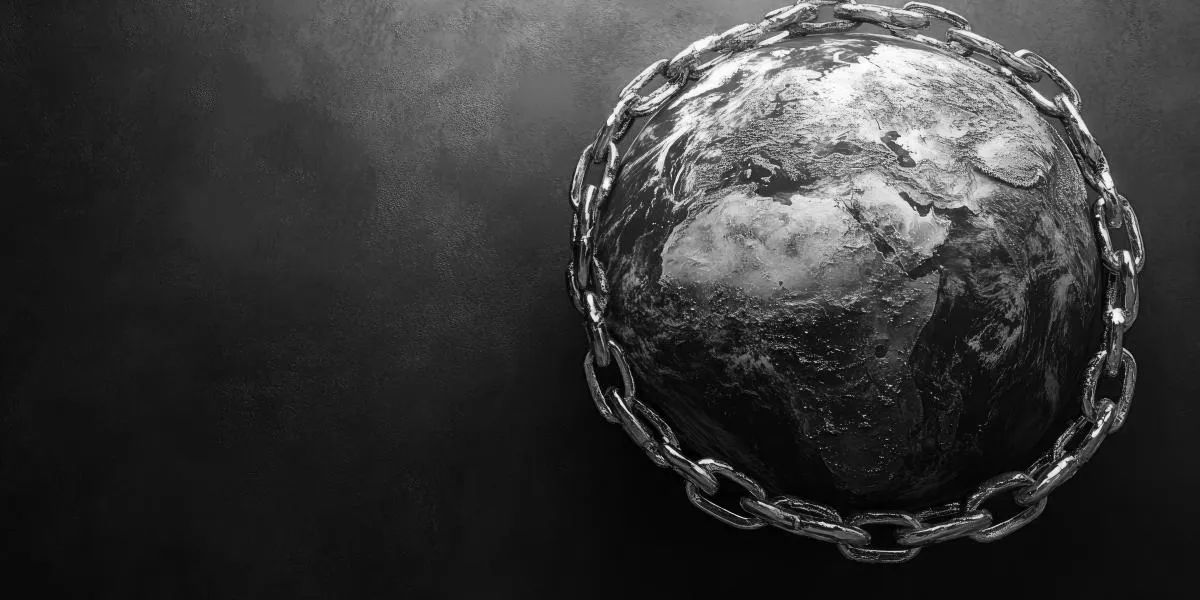
Summer 2023, when the “democratic wind” in Europe began blowing from east to west
“No one knows for certain, but Vladimir Putin may be the richest man in the world today – a super Don (Godfather). Far beyond the ambitions of Vito Corleone, he has created something entirely new on the global political scene. Countries used to have intelligence services. Today, Russia resembles an intelligence service that has acquired a state.”
Nothing is as it was before. This summer the “democratic wind” in Europe changed direction. It no longer blows from the West, but from the East. Don Vito Corleone is no longer an American Italian, but a Russian. James Bond is no longer British, but Czech
The EU’s engine of development is no longer the German-French pairing, but the Polish-Ukrainian one. Closed off to Russia’s strategy of anchoring itself within the Union, this new engine has surrendered European strategic autonomy to the “Western democratic wind”: the spread across the subcontinent of American confrontational strategies, both military and energy-related. On one hand, these strategies have brought the German economy to the edge of the abyss. On the other, they have finished off Françafrique – the idea of a Commonwealth à la française – because the Western democratic model in France’s African colonies produced a mafia-like system of illicit enrichment, with the proceeds carried out in suitcases; toxic counter-intelligence agents were planted, elections rigged, coups organized. This summer, that old democratic model for Africa was replaced by the Eastern, Wagnerian one. And this happened without any show of solidarity, in that same space, from the French allies of the Americans and Europeans.
The eyes of the world’s public were fixed on Yevgeny Prigozhin and his fake coup. After nearly a decade of warfare between Moscow and Washington in Ukraine over the European gas market, this summer brought into the light the workings “between the lines” of the mercenary business, originally presented as a clash between good and evil, the dark and light sides of the Germanic soul: the Wagnerian and the Mozartian…
Contemporary forms of the mercenary business
As Nicolas d’Estienne d’Orves (Le Figaro’s literary critic) argues, being a Wagnerian or a Mozartian means adopting irreconcilably different ways of life. The Mozartian soul is fickle, the Wagnerian one devoted. When the latter loves, it devours the other and absorbs it. The Mozartian, for his part, refuses to commit. Nothing terrifies him more than devotion.[1].
First, at the start of the year, the Mozartians (the Anglo-American private military company Mozart, named in opposition to Russia’s Wagner) officially withdrew from the Ukrainian war theater. This came after a genuine internal war whose protagonists ended up in a Wyoming courtroom (mutual accusations of defamation, alcoholism, theft, threats, lack of an ITAR license, sexual harassment, opaque financial management of the group, etc.).
As the French Centre for Intelligence Research notes[2], thanks to the evidence provided by the various parties in that court case, and based on information revealed after Mozart’s dissolution, it has become impossible to ignore the sheer number of commercial private military groups operating in Ukraine. Just as it is impossible to ignore the fact that all of them resort to the same opaque collection and spending of funds in the name of charitable work. They use the Ukrainian war context to forge a false humanitarian image, and exploit the intricacies of American law governing the collection of donations in order to secure contracts with the Ukrainian authorities. The charitable actions they organize are, in fact, communication and marketing arguments aimed at legitimizing their presence and military activity in Ukraine. However, the summer was marked not by that well-known Mozartian stage-setting, but by the impenetrable Wagnerian one, in whose final act Yevgeny Viktorovich Prigozhin irreversibly sinks into the night, accused of having betrayed the Wagnerian idea of loyalty.
All summer long, Europeans watched the Wagner reality show with bated breath. Could Wagner overthrow Putin? And then would some other, Mozart-style military formation take over Wagner’s mercenary business, enjoying near-total immunity, unlike a regular army bound to obey military rules? Indeed, it has been proven that the most profitable role to play is that of a praetorian guard. Just as, everywhere the United States spread democracy and/or detected a hotbed of terrorism (chiefly in Iraq and Afghanistan), it was America’s Blackwater that served as the forerunner and model for every post-Cold War private military company (PMC).[3]
The development of private military companies
At one time, the very name Blackwater sent a chill down the spine, evoking the black waters of the Great Dismal Swamp, a 45,000-hectare wetland stretching between Virginia and North Carolina, in Camden County, where the company is headquartered. When the chill of the name turned into a chill on the ground — particularly in Iraq, following a series of serious crimes and offenses committed by Blackwater’s operatives — the PMC was discredited before the US Congress, and the Iraqi government refused to renew its operating license. It was then, in 2009, first renamed XeServices LLC, then Academi, thereby preserving its contractual relationship with the US official security apparatus. Academi (formerly Blackwater and Xe) subsequently merged, under the umbrella of the PMC Constellis Group,[4] with the companies AMK9, Centerra, Edinburgh International, Gregg Protection Services, Olive Group, OMNIPLEX, Strategic Social and Triple Canopy. The Constellis Group functions as a kind of PMC holding organization, with a central training center located in Moyock, North Carolina, belonging to Academi. In 2016 it was bought by Apollo Global Management, which by 2018 had already put the company back up for sale[5]… Not only does this make it harder to track the activity of one and the same organization operating under a different name, it is also a communications trick — a further formal distancing from Blackwater. Yet not only have that organization’s condemned methods remained at the heart of the private military companies that followed it, they have become a must in the expensively billed training of military troops operating on the world’s battlefields.
How it all began
As early as 1945, the United States integrated the use of private military companies into its intelligence-military structure, mainly for economic and technical reasons. From the Cold War period through the Middle East conflicts and the Vietnam War, its private military subcontractors intervened around the world. One of the first significant operations was the use of an air transport company called Air America, created in 1946. Owned by the CIA, this firm served as air support and transport for Chiang Kai-shek in his war against Mao Zedong. After 1949 and Mao’s rise to power, Air America was gradually “recycled” during the Vietnam War. Thus, already between 1945 and 1975, through Air America, the Americans experimented with the possibilities of subcontracting in order to draw on outside expertise for major military operations[6].
The fall of the Berlin Wall in 1989, the collapse of the Warsaw Pact in 1991, and faith in Fukuyama’s “end of history” led to a drastic reduction in the budgets and manpower of armies around the world. In the United States, the defense budget shrank by 28%, and the then Secretary of Defense Dick Cheney had to carry out his mission as a warrior[7] (as “the world’s policeman”). Out of this was born a kind of Cheney-Rumsfeld doctrine of repeatedly entrusting support for the American military to private military companies (outsourcing). It reached its peak during the 2003 Iraq War, because at the time of the intervention the American budget was extremely limited while the needs in Iraq and Afghanistan were enormous. In the end, during the Iraq War, nearly 90% of support missions were entrusted to non-combat personnel — chiefly the peripheral ones: security and protection, convoy escort, medical assistance, or keeping equipment operational. Since the human resources of PMCs include a wide range of demobilized officers, up to and including the highest-ranking ones, they are equally well suited to training every segment of the armed forces — for instance, to fighting maritime piracy or to cyber defense. PMCs are therefore always ready to compensate for the shortcomings of an army which, by its very nature, is in a state of permanent restructuring.
When the Americans left Afghanistan in 2021, it was clear that the PMCs operating there would look for a way to replace that lost, large “market” — in other words, that they would try to “recycle” themselves through the civil war in Ukraine. Russia’s special military operation, presented as a breakout from the hostile NATO encirclement, coincided with that crisis situation in Ukraine. The largest European battlefield since the Second World War was opened. Because, like any other business, PMCs operate according to market laws, it is in their interest for armed conflicts to last as long as possible, as well as for crisis and war hotspots to proliferate, which multiplies the demand for their military and/or peacekeeping services.
The Wagner show, part 1
PMC Wagner Center was founded in 2014, during the annexation of Crimea, as an antidote to the Anglo-American PMCs, and suffers from very similar malformations.[8] This summer it found itself at the center of attention because it loudly (in the media) completed what PMC Mozart had quietly (in the courtroom) begun. It fully lifted the veil on the way private military firms are paid, often in kind (the appropriation of natural resources), as well as on the dangers faced by the authorities who sponsored these PMCs. It became impossible to keep hiding, behind various names and organizational forms, the essentially predatory nature of the mercenary business. In the old paramilitary organizations, mercenaries operated under the concealed command of some foreign power. Today PMCs operate under the command of a domestic power that fits the unchanged market logic of mercenary work into its own nationalist, militarist, or expansionist doctrine. And even when it accepts doctrinal command, mercenary work rests on taking on risks that regular soldiers would find difficult to accept. That is why mercenaries, even when they sincerely swear allegiance to their patron’s doctrine, demand to be rewarded — both officially and “between the lines” — for taking on risky work “between the lines.” They do not hesitate to voice their discontent when the rewards fall short of their expectations. Just as PMC patrons do not hesitate to redirect even their mercenaries’ discontent to their own advantage. That is how, this summer, under the veil of the “Wagner show” meant to hold the West’s attention, the Kremlin quietly and successfully restructured not only its regular army, but PMC Wagner itself — the regular army in line with the needs of defending the enlarged territory of the Russian Federation following the annexation of part of Ukrainian territory.
The process unfolded quietly, keeping pace with the first act of the “Wagner show” — that is, throughout the full two months of Prigozhin’s loud criticism of the Russian military command, to which the Kremlin did not react. The real reason for the Wagnerites’ discontent did not lie in the inevitable restructuring of their firm and the integration of part of its troops into the regular army, but in preserving the material privileges they had acquired. Those privileges, in turn, concerned the network of Prigozhin’s companies exposed by Western intelligence services, which used it in anti-Russian propaganda as proof that Russia too was a colonial power plundering Africa.[9] Since Yevgeny Prigozhin was under heavy pressure from his fighters to secure, from his “godfather” Vladimir Putin, the preservation of the privileges they had gained, the second act of the “Wagner show” began.
The Wagner show, part 2
To keep the trust of his fighters, Prigozhin first backed their demands, during the spectacular 18-hour march on Moscow — a fake coup attempt which the Russian authorities did not obstruct the “coup-plotters” from carrying out. In parallel, he negotiated with Putin and convinced his troops that he had reached a favorable agreement with the Russian authorities on their behalf. As a result, the Wagnerites obediently withdrew. Prigozhin and the Kremlin thereby demonstrated that they were in control, identifying the key malcontents within Wagner and their ties to Russian institutions. Wagner was then “dissolved” by motivating the fighters either to return to the Ukrainian front and finish the job they had started, or to go to Belarus to forestall the possibility of a genuine coup — because, during their march on Moscow, the West had awakened its “sleeper agents” in Russia and Belarus and called on them to seize power[10]. The remaining “rebels” decided instead to reinforce Wagner’s troops in Africa, in order to secure funding for the PMC (gold and other metal mines in the Central African Republic and Mali) and to repair its image with the Russian government and public.
However, the unstoppable series of military coups in Francophone Africa (sub-Saharan Africa — a string of states from Guinea-Conakry in the west to Sudan in the east) linked to Wagner reached its peak this summer (Niger and Gabon). Anti-French demonstrations infuriated the French, and China, the largest investor, began to fear for its economic interests. This was a signal to Moscow — which had no interest in opening a second front in Africa — that the process of dismantling Wagner needed to be concluded. And so, finally, in a spectacular plane crash, the commander of military operations, Dmitry Utkin, co-founder of PMC Wagner, who had named the firm after his own call sign in the Russian army, thereby paying tribute, for the second time, to Hitler’s favorite composer, fell silent forever. Nor will anything more ever be heard of Valery Chekalov, who was key to managing the Wagnerites’ controversial network of companies.
Don Vito Corleone is Russian
Yevgeny Prigozhin, too, left the world stage, erasing the visible link between the Kremlin and Wagner’s malfeasance. Since all the information comes from Russian sources, it is impossible to say with certainty whether Prigozhin was actually on the destroyed plane whose passenger list bears his name, or whether he traveled on his other plane, which safely reached its destination — after which he may have sunk into the comfort of anonymity, continuing to share his valuable knowledge with the all-powerful Russian intelligence community.
The mystery remains fully intact, and the scenario of the Kremlin’s reckoning with Wagner seems to have been inspired by the philosophy of the cult figure of Coppola’s Godfather, Don Vito Corleone: loyalty, composure, cold-bloodedness, patience and experience; make an offer others cannot refuse; a bad deal is always better than a war; take care of the family and give it services free of charge.
As George Weigel, one of the more prominent American intellectuals, stated back in 2015, with undisguised anger and bitterness: “No one knows for certain, but Vladimir Putin may be the richest man in the world today – a super Don (Godfather). Far beyond the ambitions of Vito Corleone, he has created something entirely new on the global political scene. Countries used to have intelligence services. Today, Russia resembles an intelligence service that has acquired a state. Such a Russia, with an oligarchy dominated by the FSB, buys up everything available – in London and on the Riviera – wherever and however much it can.[11]” In other words, the students have surpassed their teachers; and this is the key to understanding the irrational hatred of Russians into which the Anglo-Americans have thrown themselves entirely. The “Eastern democratic wind,” which puts loyalty to nation and family first and promotes anti-colonialism (anti-British, anti-French, anti-American), is nonetheless spreading across continents. Especially wherever the Russians have reawakened the old Soviet-era anti-colonial cooperation networks (LCI television, 7 September 2023). The business arm of that “Eastern wind,” though considerably weaker, swept through the French business world this summer.
James Bond is Czech
His name is Daniel Křetínský. He is not British, but a Czech from Brno. He is not even an Anglophile but a Francophile, yet he is nonetheless identified with James Bond. Not only because of his exploits, but also because of his looks, which recall his British namesake Daniel Craig, the last James Bond[12]. He is the son of a computer science professor and a lawyer, but the key to his business rise lay in his “historical godfathers.”
With the first, Petr Kellner, the richest Czech billionaire, Křetínský also became “intimately connected” through the oligarch’s daughter Anna, with whom he lives.
The second is the Slovak businessman Patrik Tkáč. These business godfathers would not have produced such notable results without his closeness to the former conservative, climate-skeptic Czech prime minister Mirek Topolánek. It all began with the Czech tycoon’s calculation that it would pay off to take on the role of “Europe’s junkman” — that is, the one who takes over, at a low price or even for nothing, coal-fired power plants and mines that no one wants anymore. Assuming that European environmental policy was partly an illusion and that Europe would need far more time to switch to renewable energy, he decided to swim against the current, which proved to be highly profitable. In general, Křetínský successfully carries out every idea that seems unfeasible to others. He is not a financier but a former lawyer, yet he is capable of putting together financing plans worth several hundred million euros within a few hours or days, thereby seizing the best business opportunities on the financial markets.
Hence the fascination with Křetínský among Western European, especially French, business circles. But also suspicions that he is in fact a “Russian Trojan horse,” a Russian James Bond, even though he presents himself as a staunchly pro-NATO democrat, liberal, and progressive. To such accusations, Daniel Křetínský replies coolly, patiently and calmly: “For someone who grew up under Soviet rule, the role of Moscow’s servant is the last one I would ever want to play in my life.[13]”
Citizen K
Alongside energy, distribution (Sainsbury’s, Metro, Fnac, Darty, Casino), IT (Atos), and the creation of the business television channel B Smart, the Czech tycoon — often dubbed “Europe’s biggest polluter” — decided, after the Czech press, to also get his hands on the French press and publishing industry. Indeed, after taking stakes in or taking over prestigious French news outlets such as Le Monde, Elle, France Dimanche, Ici Paris, Marianne and others, this summer he also took over France’s second-largest publisher, Editis — a publisher grouping some fifty publishing houses, including the most prestigious names such as Robert Laffont, Nathan, Le Robert, Plon, Julliard and Pocket, which together generated revenue of 789 million euros in 2022. This has earned him another label — “Citizen K” — raising the question: will his lightning-fast publishing career, like that of Citizen Kane, which began out of love for the press and the book and a desire to preserve an idealized personal integrity, gradually turn into an unlimited accumulation of power and wealth? And will the super Don catch up with Citizen K…
[1] LE FIGARO, https://www.lefigaro.fr/culture/2010/07/25/03004-20100725ARTFIG00172-tes-vous-mozart-ou-wagner.php
[2] FRENCH CENTRE FOR INTELLIGENCE RESEARCH: https://cf2r.org/actualite/la-chute-de-the-mozart-group-et-le-financement-des-groupes-combattants-en-ukraine/ .
[3] See SCAHILL Jeremy, Blackwater: The Rise of the World’s Most Powerful Mercenary Army, Nation Books, 2007.
[4] CONSTELLIS GROUP, https://www.constellis.com/who-we-are/history/ .
[5] REUTERS, https://www.reuters.com/article/us-constellis-m-a-idUSKBN1JA2W6 .
[6] DIPLOWEB, https://www.diploweb.com/Les-societes-militaires-privees-Wagner-Blackwater-Mozart-et-les-autres-Entretien-avec-P-de-Jong.html .
[7] De JONG Peer (colonel), Agir entre les lignes, Mareuil Édition, 2023.
[8] Wagner’s official website: https://wagnercentr.ru.
[9] See dossier: https://dossier-center.appspot.com/prig-it/.
[10] LE MONDE: https://www.lemonde.fr/idees/article/2023/07/31/russie-l-opposition-democratique-doit-inciter-les-russes-a-mettre-fin-a-la-guerre-et-a-passer-a-une-reconstruction-du-pays_6184004_3232.html .
[11] WEIGEL Georges, « Lenin Meets Corleone”, National Review Online, EPPC – Ethics & Public Policy Center, 7.03.2015, https://eppc.org/publication/lenin-meets-corleone/ .
[12] AFP – JDM, 24.04.2023.: https://www.journaldemontreal.com/2023/04/24/qui-est-daniel-kretinsky-le-milliardaire-discret-qui-etend-ses-tentacules-dans-les-medias-francais.
[13] ENTREPRENDRE: https://www.entreprendre.fr/qui-est-vraiment-daniel-kretinsky/ .